Plantation Lily vs Hosta Minuteman: What's the Difference?
A gardener holds a ruler to the white edge of a leaf, reads the number in millimeters, and then realizes nobody ever told them what number they were looking for. That gap is where plants go wrong. Buy a look-alike for the wrong spot and the pale margin scorches, the mound crowds its neighbors, or the bed never fills in the way the photo promised.
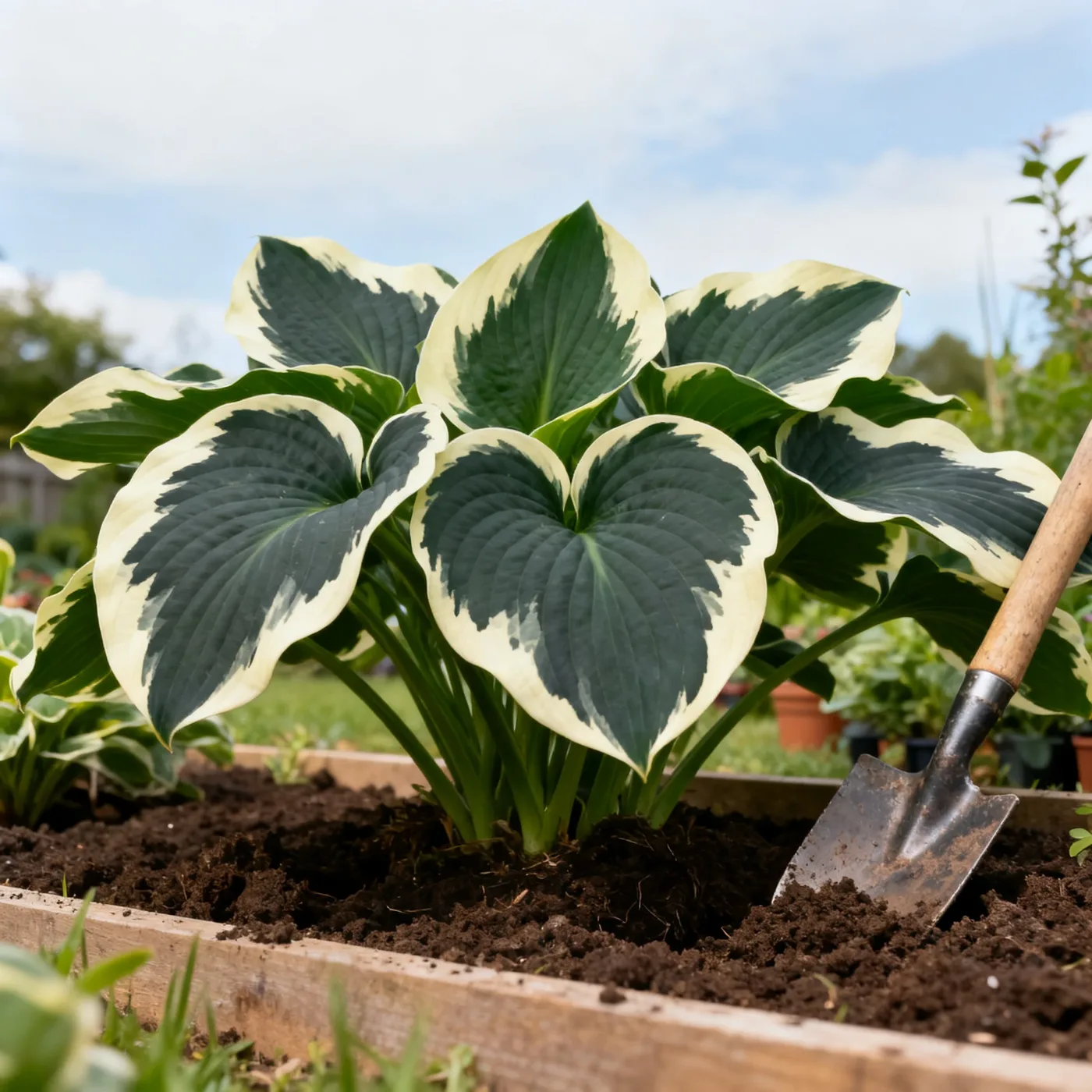
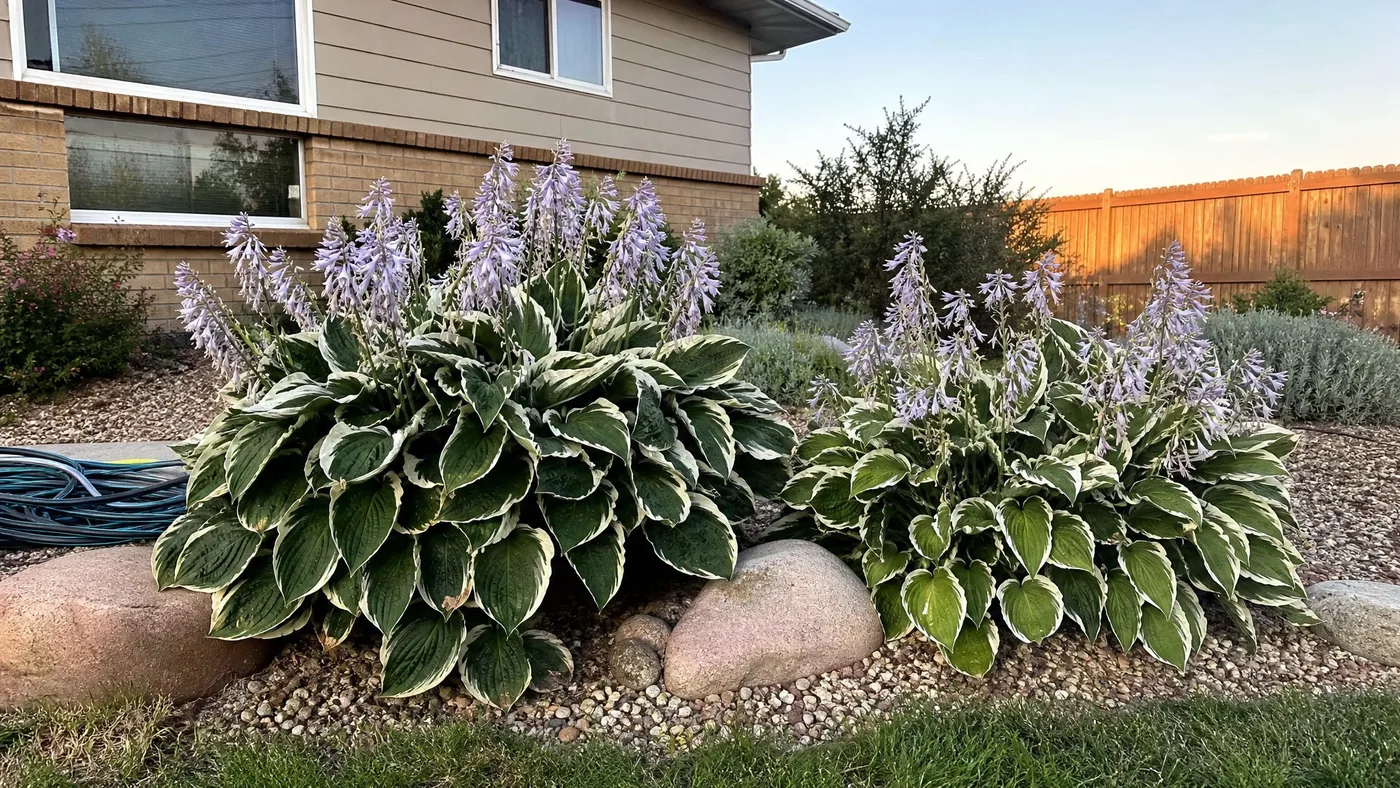
Plantation Lily (Hosta 'Patriot') and Hosta 'Minuteman' both wear a white border on dark green leaves, and most shoppers cannot tell them apart on a tag. This guide covers everything you need to know about choosing between them, from measuring a leaf margin to counting plants for a 12-foot border and matching each one to its light. We follow one border all the way through, with the numbers shown.
Measuring a Leaf Margin Before You Compare
A leaf margin is the band of lighter color running around the outer edge of a leaf blade, and its measured width is the distance from the outer edge inward to where the green begins. Think of a picture frame: the mat around a photograph has a width, and two frames can look alike until you lay a ruler across the mat. Hosta margins work the same way, and a quarter inch is easy to miss by eye.
Because a margin is rarely perfectly even, a single reading can mislead you. Take the reading the same way every time, on leaves of the same age, and you can compare plants honestly.
How to Take the Reading
Use a small ruler or a tape measure marked in fractions of an inch, and measure on a fully expanded leaf from midsummer rather than a new spring leaf. Follow these steps for each plant:
- Choose a mature leaf from the outer ring of the mound, one that has fully opened and is not torn or chewed.
- Lay the ruler across the widest, flattest part of the blade, away from the tip and the base.
- Measure straight from the outer edge to the point where the green begins, and write down the number.
- Repeat on four more leaves and note the typical figure, because margins vary a little from leaf to leaf.
Plantation Lily Margin Width and the 1-Inch Target
The number to look for on Plantation Lily is about one inch. Iowa State's hosta table describes 'Patriot' leaves as 7 inches long and 5 inches wide, dark green with a 1 inch wide white margin and a glossy top surface. On a 5-inch-wide leaf, that means the white band is a large share of the blade, not a thin trim.
Clemson's hosta fact sheet calls the margin "wide striking white," which matches what you see in the pot. The cultivar's name comes from that crisp contrast, and it is the main thing buyers pay for. Our other guides on what Plantation Lily looks like describe the leaf shape and texture in more detail.
Treat the 1 inch as a target for a healthy, mature leaf, not a guarantee on a young plant. Young divisions often show a narrower edge in their first season and widen as the crown matures. Measure in your own bed with the steps above, and write the reading next to the date.
Minuteman Margin Width Against Plantation Lily
The same Iowa State table lists Minuteman leaves at 6 inches long and 4 inches wide, dark green with a 0.75 inch wide, creamy white, smooth margin. Set next to Plantation Lily, the margin is a quarter inch narrower, roughly 6 millimeters, which makes the Plantation Lily band about a third wider. The leaf is also an inch shorter and an inch narrower overall.
| Trait | Plantation Lily | Minuteman |
|---|---|---|
| Leaf length | 7 in | 6 in |
| Leaf width | 5 in | 4 in |
| Margin width | 1 in | 0.75 in |
| Margin color | White | Creamy white |
What does that look like in the bed? From a few steps away, Plantation Lily reads as a bold white outline on every leaf, and Minuteman reads as a finer, slightly softer line. One of the most common questions we get is whether the narrower edge on Minuteman is a flaw. It is not. It is a different proportion, and the cream tone blends more gently with the green.
Planning a 12-Foot Border With Plantation Lily
Here is the worked example we use with customers: a 12-foot border along the east side of a house, 144 inches of straight edge. Your first decision is the target look. If you want a bold white line that reads from the patio, the 1 inch margin makes Plantation Lily the stronger choice. If you want a calmer, finer edge, Minuteman suits it better. We start with Plantation Lily here because it is the plant this guide is built around.
The second decision is bed depth. 'Patriot' grows 12 inches tall and 30 inches wide, so each mound needs about 30 inches of room front to back. A bed 3 feet deep gives the mound space without leaves flopping onto a walkway. A shallower bed forces you to trim the front row of leaves or to give up on the full spread.
The third decision is when you will see the border. A white margin shows best in shade, so a border viewed in the evening from a porch gets full value from either plant. If you mostly pass it at midday in bright light, expect the glare to flatten the contrast, and plan to use the glossy leaf surface as part of the effect.
Counting Plants and Spacing for Mature Size
Divide the border length by the mature width and you have a plant count. A mature 'Patriot' is 30 inches wide, so 144 divided by 30 is 4.8. We round up to 5 plants and space them 28.8 inches apart on center, which lets neighboring leaves just touch at maturity. The first plant sits 14.4 inches from the end, and each one after it sits 28.8 inches farther along.
That spacing sits inside Clemson's advice to space hostas 1 to 3 feet apart. Going the full 3 feet would leave four plants with bare soil between them for a few seasons, which invites weeds and gives slugs shaded ground to hide in. Our size and growth rate guide explains how quickly the mound fills.
Counting Minuteman for the Same Border
Minuteman is a smaller-leaved plant, so it fits more densely, but we do not have a published mature width from our sources to quote. Read the width on the tag, or ask your local extension service. As an illustration only, a tag that says 24 inches gives 144 divided by 24, or 6 plants on 24-inch centers. The method is the same: length divided by width, rounded to a whole plant.
Where Plantation Lily Sits in Sun Tolerance Terms
Sun tolerance is how many hours of direct light a leaf can take before the tissue browns or bleaches. For a white-margined hosta, the margin has little green pigment, so it is the first part to show damage. Some cultivars are sun-tolerant but all do best with shade in the afternoon, and South Dakota State adds that very few, if any, hostas do well in strong, direct light all day.
Now map the border. Ours faces east, so it gets direct sun from sunrise until about 11:30 a.m. and shade after that, except the last 4 feet at one end, where light lasts until about 2 p.m. Morning light is gentle, and Plantation Lily handles it well. Our shade tolerance guide goes deeper on how it responds to each exposure.
Minuteman is where the two differ. NC State describes 'Minuteman' as more sun and heat tolerant, with bright white edges on dark green foliage. That makes it the safer pick for the brighter 4-foot stretch, where the afternoon hours would test Plantation Lily's wider white band. In our rows, the widest margins are always the ones that show stress first.
Reading the Numbers Back Into a Planting Plan
Now put the figures together. The 8 feet that gets only morning light takes Plantation Lily: 96 inches divided by 30 is 3.2, so we plant 3 on 32-inch centers, still inside the 1 to 3 foot range. The 4 feet that gets light until 2 p.m. takes Minuteman: 48 inches divided by an assumed 24 inch width is 2 plants on 24-inch centers. The total is 5 plants in 12 feet, and sun hours decided the split, not looks alone.
Put the two cultivars in blocks rather than alternating them, since the leaf sizes and margins differ and a mixed row looks restless. Put the largest mound, Plantation Lily, at the visible end near the patio. Mulch the soil between plants and watch for slugs in the first season, as covered in our pests and diseases guide.
If you want one plant for the whole border and your light is mostly morning, we would choose Plantation Lily for the bolder edge. If your border gets afternoon sun or heat, we would choose Minuteman and accept the finer line. Our plants are grown to match the measurements in this guide, so the numbers you check at home should line up.
Your Own Bed, One Measurement at a Time
The difference comes down to three readings: a 1 inch margin against 0.75 inch, a 30 inch mound against a smaller one, and morning light against afternoon light. Plantation Lily gives the bolder edge and suits shade or gentle sun. Minuteman gives the finer edge and takes more light and heat. See our cultivar comparison or the Francee comparison if you are still weighing other look-alikes.
Before you buy anything, go out to your bed in July, hold a tape measure at the edge of one leaf, and record the width of the white band in inches. Then measure how far the shade reaches at 2 p.m. Those two numbers tell you which of the two plants belongs there, with the tape measure still in your hand and the white margin of that single leaf the last thing you checked.
Plantation Lily
Nursery-grown Plantation Lily in sizes from 1 Gallon, shipped to your door.
From $35.97
Shop Now →Plantation Lily spends its seasons in our beds, where the soil stays moist and drains well and the leaves get filtered light, so the margin you measure on one of ours is the one you can expect to keep. Our own farms raise every plant we sell, and we run the whole thing as a small business with a hands-on grower's eye. If your tape measure has settled the question, have a look at what is in stock now.