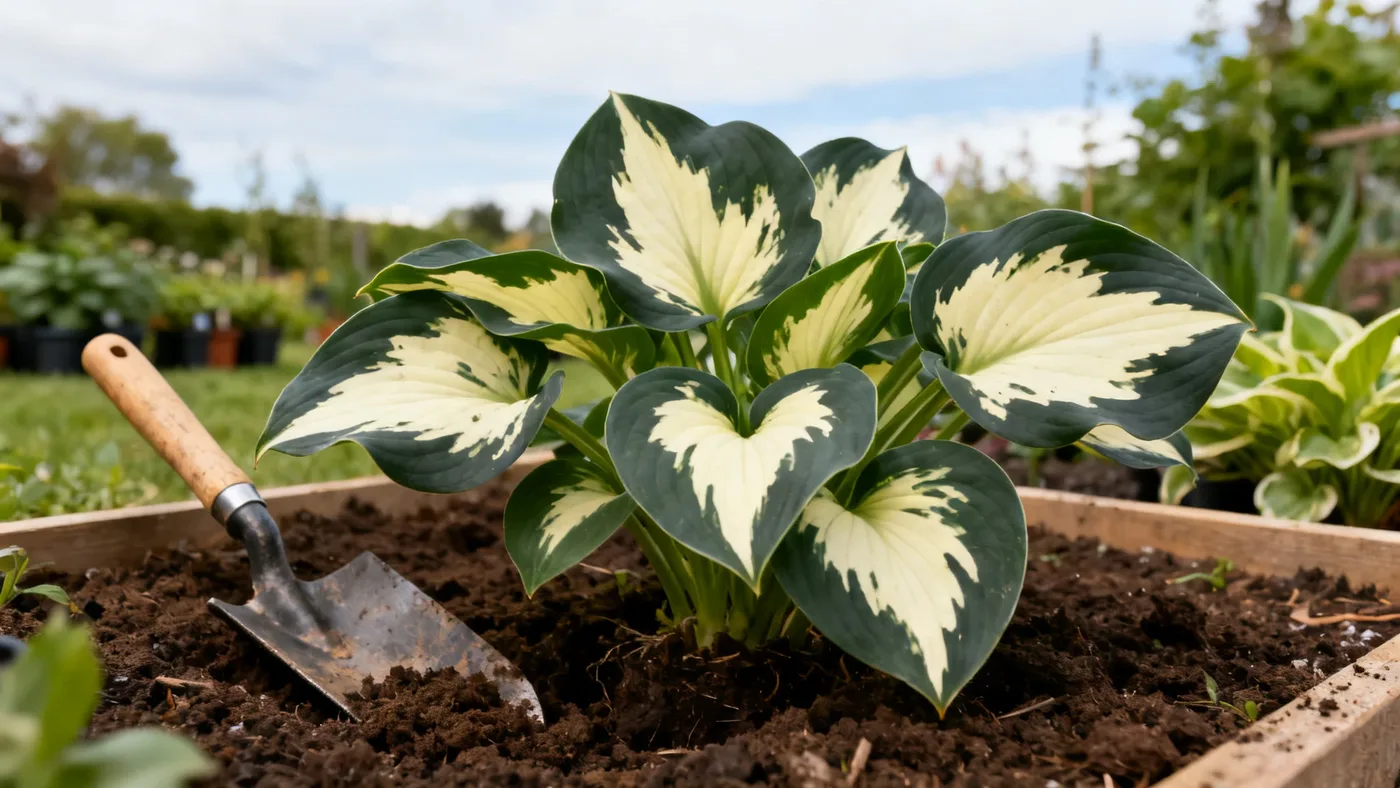
How Big Does Plantation Lily Get? Size and Growth Rate
Plantation Lily (Hosta 'Patriot') looks modest in a one-gallon pot and then spreads to nearly 3 feet across. Plant it too close to a path or a neighbor and you spend years cutting back leaves or digging out a crowded clump. Give it the right room and it pays you back with a wide, white-edged mound that lights up a shady corner and sends up lavender flower spikes for the bees in summer.
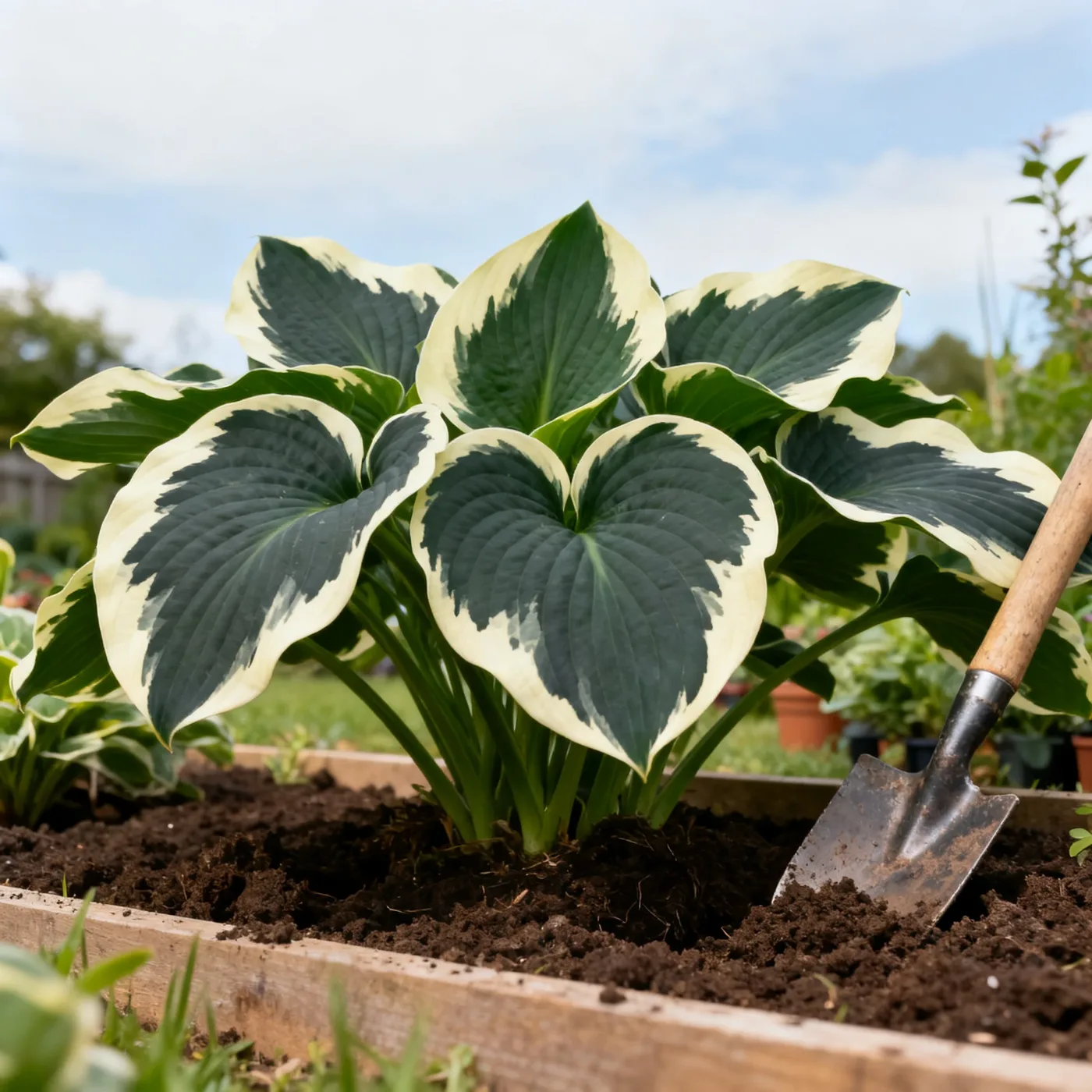
Below, you'll find out all about Plantation Lily size, including mature height and spread, how fast it grows, how far apart to plant it, what to expect in a pot, and when an old clump needs dividing. We grow it in our own rows, so the numbers here reflect what we see and are checked against published sources.
Plantation Lily Size at a Glance
Plan for a clump about 2 feet tall and up to 3 feet wide, in a shady or part-shaded bed with room to grow. That suits you if you want one bold, white-edged accent. It does not suit a narrow strip along a walkway.
How big does Plantation Lily get at maturity?
A mature Plantation Lily reaches 18 to 24 inches tall (45 to 60 cm) as a foliage mound, with flower scapes extending to 28 to 30 inches. The plant spreads 24 to 36 inches wide (60 to 90 cm), making it a substantial clump in the landscape. This size is typical when the plant has access to consistent moisture and rich, well-drained soil.
Published sizes back this up, since the hosta genus runs from 4 inches to 2.5 feet tall and 6 inches to 3 feet wide, so 'Patriot' sits at the generous end of the group.
What's the difference between foliage height and flower scape height?
The green leaf mound of a Plantation Lily reaches 18 to 24 inches, which is the visual mass you see from across the garden. The flower stalks (scapes) that emerge mid to late summer grow taller, reaching 28 to 30 inches when the pale lavender flowers open. This extra height is temporary and the scapes are slender, so they don't dominate the profile the way the dense foliage does.
Is Plantation Lily width the same as its mature spread?
Yes, the 24- to 36-inch width refers to the side-to-side spread of the foliage clump at maturity. This is the actual garden footprint your mature plant will occupy. Measuring this width helps you plan spacing around other shade perennials like ferns, astilbe, or heuchera.
Does Hosta 'Patriot' mature size vary by region?
Exact size shifts with climate, soil richness and water. In zones 3 and 4, we often see plants at the smaller end of the range, while growers in zones 8 and 9 with longer seasons frequently reach the full 24-inch height and 36-inch spread. Consistent moisture and regular compost help plants reach their maximum wherever you live.
Plantation Lily Growth Rate and Timeline
Plantation Lily does not rush. This section covers its pace, how long a nursery plant takes to fill out, and when the first flowers open.
How fast does Plantation Lily grow?
Like the rest of the genus, Plantation Lily has a medium growth rate, not a fast one. A small nursery plant gains ground steadily and reaches a full clump in 3 to 4 years from planting. That pace lets it build a deep root system and the dense foliage hostas are prized for.
How long does it take Plantation Lily to reach mature size?
Plan for 3 to 4 years to reach full mature height and width starting from a nursery-grown plant. In year one, the plant focuses on root development and may not gain as much visible spread. By year two, you'll notice measurable growth, and by year three to four, the plant reaches its peak size of 18 to 24 inches tall and 24 to 36 inches wide.
When will my Plantation Lily bloom?
Most Plantation Lily plants bloom in their 2nd or 3rd year after planting, sending up lavender flower spikes in mid to late summer, usually July and August depending on your zone. If your first-year plant doesn't flower, don't worry, because it is putting its energy into leaves. In our rows, the bees find the blooms within days of the first buds opening.
Light and Feeding: What Helps Plantation Lily Grow
You can't hurry a hosta, but you can stop slowing it down. Light and feeding are where most size problems start.
Will my Plantation Lily get smaller in shade versus partial shade?
We grow Plantation Lily with morning sun and afternoon shade. Plants in deep shade still reach good size but grow more slowly and bloom less. In hot climates, shade the leaves from harsh afternoon sun so the white margins don't scorch.
The advice we don't follow is the old rule that every hostas needs deep shade. Too dark a location leads to slower growth rates, and a plant stuck in a dark corner takes longer to fill its space. Our sun requirements guide shows how to read your site.
Does faster growth mean a healthier plant?
Not necessarily. Medium growth is normal for Plantation Lily and reflects its preference for steady, moisture-rich conditions rather than rapid expansion. A plant with dense, well-colored foliage that adds a little more spread each year is thriving. Pushing a plant to grow faster often leads to weaker leaves and reduced vigor, so patience pays off.
Can I speed up Plantation Lily growth?
Consistent moisture and rich soil amended with compost are the best ways to support vigorous growth within the plant's natural pace. Heavy nitrogen fertilizing can actually weaken the distinctive creamy-white margins that make 'Patriot' special, so light, balanced feeding in early spring is better. Focus on removing dead foliage and providing steady conditions rather than forcing growth.
Spacing Plantation Lily and Planning Your Bed
Space by the mature width, not the size of the pot. We don't follow the common advice to set hostas a foot apart for an instant full look. It looks good for a season, then the clumps fight for light and air.
How far apart should I space Plantation Lily plants?
Plant Plantation Lily 24 to 36 inches apart, center to center, depending on how quickly you want the planting to fill in. Closer spacing (24 inches) creates a denser, more uniform look in 3 to 4 years but risks crowding if plants are neglected. Wider spacing (36 inches) gives plants room to develop their full mature width without competition.
What if I plant Plantation Lily closer than recommended?
Spacing tighter than 24 inches can lead to overlapping clumps, reduced air circulation, and increased risk of fungal issues in humid climates. If you've already planted closely, plan to divide plants after 2 to 3 years to give them room to develop. It's easier to start with proper spacing than to dig and move established clumps.
Can I plant Plantation Lily in a drift or mass planting?
Yes, mass plantings of Plantation Lily under trees or along borders are a classic shade garden design. Stagger your plants at 24- to 36-inch spacing, offset them in a triangular pattern for visual interest, and they'll knit together over 3 to 4 years into a cohesive ground layer. This approach works beautifully with 3, 5, or 7 plants in a single drift.
How do I know if my garden space is big enough for Plantation Lily?
Measure the mature width of 24 to 36 inches and allow that much room without crowding neighbors. In a narrow border, check that the full spread won't shade out shorter plants or block views. A single Plantation Lily is a strong accent and several make a bold statement, so scale your planting to the shade you have.
How many Plantation Lily plants should I buy to fill a shaded border?
Divide your border's linear footage by 2 to 3 feet to get a rough plant count. A 10-foot-long shaded border might use four to five plants at 24- to 30-inch spacing for good coverage in 3 to 4 years. Remember that spacing refers to center-to-center distance, so account for the mature width of 24 to 36 inches when calculating.
Can I use Plantation Lily as a focal point or specimen plant?
Absolutely. A single mature Plantation Lily, especially one with well-developed variegated foliage, makes a striking shade garden focal point. Its size is large enough to anchor a bed or foundation planting without dominating the entire landscape. If you want even more scale, we suggest a larger sport of Patriot. Pair it with lower-growing companions like Japanese painted fern or brunnera to create a tiered, naturalistic look.
Growing Plantation Lily in Containers
A pot changes the water supply more than it changes the final size. Our guide to growing Plantation Lily in pots goes deeper, and the basics are below.
Does Plantation Lily do well in containers?
Yes, Plantation Lily thrives in large containers with good drainage and consistent moisture. A mature plant in a container reaches roughly the same size as in-ground, 18 to 24 inches tall and 24 to 36 inches wide, depending on pot size and soil depth. Container growing is ideal for patios in deep shade or for gardeners who want to move plants seasonally.
What size container does Plantation Lily need?
A #3 or #5 container (3 to 5 gallons) is the practical starting size for a nursery-grown Plantation Lily. As it matures, move it up to a pot 15 to 20 inches across with ample soil depth for the full 24- to 36-inch spread. Small pots dry out too quickly and limit mature size, so step up rather than leave it cramped.
Will Plantation Lily stay smaller in a container than in the ground?
A container plant may grow slower and top out slightly smaller than the same plant in ideal ground conditions, but the difference is minor. The real factor is consistent moisture. Containers dry out faster than garden soil, so regular watering matters more than pot size, and a rich, well-draining mix helps the plant reach its full potential.
Long-Term Growth, Lifespan and Division
A Plantation Lily keeps changing long after it hits mature size. Here is what to expect over the years and how dividing in spring fits in.
How long will my Plantation Lily live?
Plantation Lily is a long-lived perennial, and 20 years or more with basic care is a realistic expectation. Its reliability makes it a worthwhile investment in your shade garden.
Does Plantation Lily stop growing after reaching maturity?
No, mature plants don't stop growing. They keep expanding modestly year after year, eventually forming multiple crowns within the clump. After 10 to 15 years, you may notice the center thinning, which is the natural signal that division will rejuvenate it.
Should I divide my Plantation Lily, and how does that affect size?
Division of the crown in early spring or early fall rejuvenates older clumps and gives you new plants for other areas. Each divided section starts as a smaller plant and takes 1 to 2 years to reach its original mature size. Dividing every 10 to 15 years keeps plants vigorous and prevents the hollow-center problem that old, undivided clumps sometimes develop.
Quick Reference: Plantation Lily Size at a Glance
This table pulls the key size, timing and spacing figures from the sections above into one place.
| Characteristic | Measurement |
| Mature foliage height | 18 to 24 inches (45 to 60 cm) |
| Flower scape height | 28 to 30 inches |
| Mature width/spread | 24 to 36 inches (60 to 90 cm) |
| Growth rate | Medium |
| Years to full maturity | 3 to 4 years |
| Years to first bloom | 2 to 3 years |
| Recommended spacing | 24 to 36 inches center to center |
| Container size | #3 to #5 (3 to 5 gallons initially) |
| Expected lifespan | 20+ years with basic care |
| USDA hardiness zones | 3 to 9 |
Now that you understand how big Plantation Lily gets and at what pace, you're ready to design your shade garden with confidence. For complete growing care including soil, moisture, and problem management, see our Plantation Lily care guide.
Giving Plantation Lily the Room It Needs
Plantation Lily is a patient plant. Plan for a clump about 2 feet tall and 2 to 3 feet wide, space it 24 to 36 inches from its neighbors, keep the water steady, and expect full size in three or four seasons. Divide it when the center thins.
Plantation Lily
Nursery-grown Plantation Lily in sizes from 1 Gallon, shipped to your door.
From $35.97
Shop Now →As a small grower with our own farms, we care about getting size right, because the top-quality plants we grow and sell only look their best when they have room to fill out the way you pictured.