Plantation Lily vs Liberty Hosta: Size and Leaf Margins
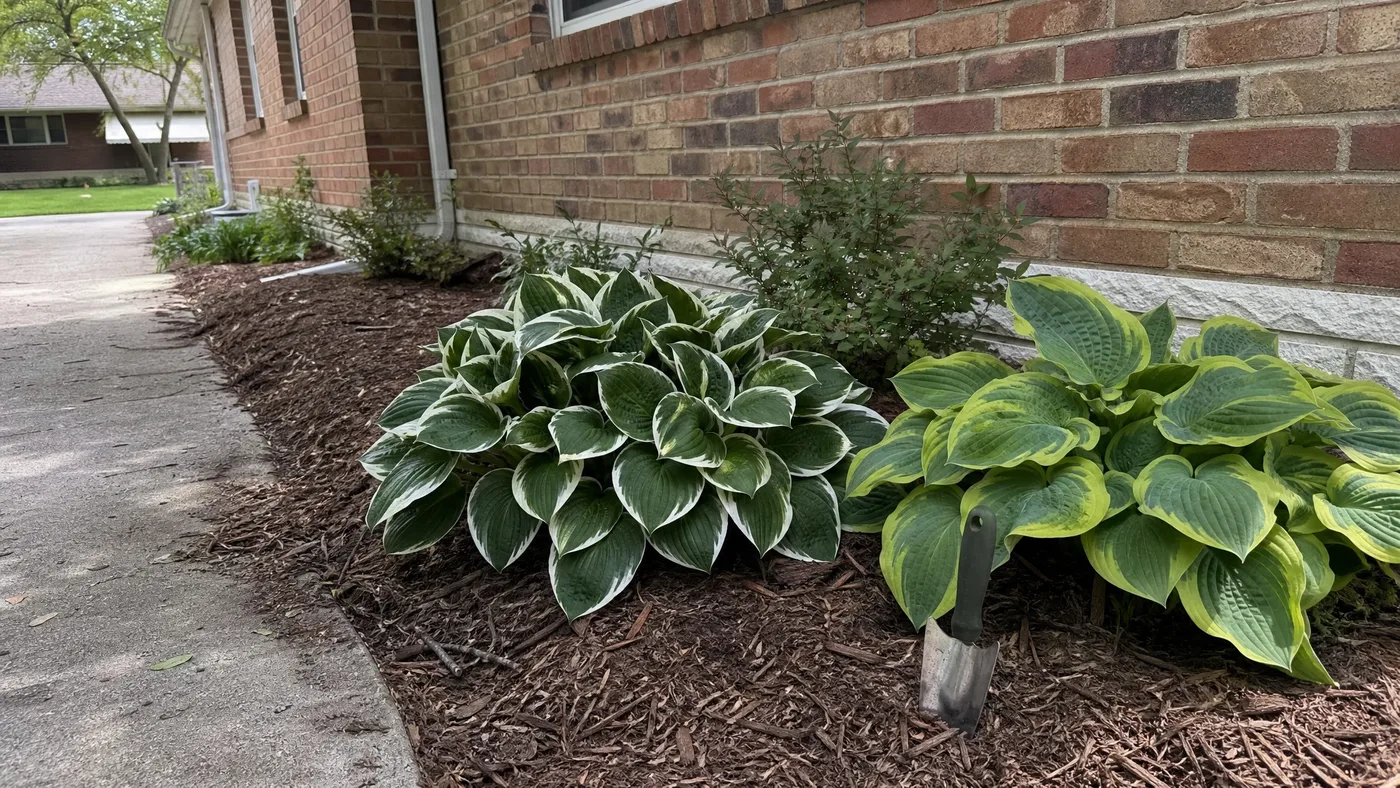
Catch a hosta edge in low morning light and you know it right away. On one plant the margin is a thin, crisp white line drawn around dark glossy leaves. On another it is a wide, buttery band that seems to glow before the sun has cleared the fence. The first is Plantation Lily, Hosta 'Patriot'. The second is Liberty, a sport that arose from Patriot and kept the edged pattern while changing the scale and the color.
Because the two share a parent, people ask us which to plant, and the honest answer depends on your bed. This guide covers everything you need to know about choosing between them, from margin width and mature leaf size to seasonal color, neighbors and what to check when you buy. Each section is one decision, and each ends with our pick.
Deciding on Plantation Lily's Crisp White Edge
Start with the look, because everything else follows from it. Plantation Lily has dark green leaves with white margins about 1 inch wide, and the tops are glossy. That is a high-contrast leaf. The white line is narrow enough that the dark green still carries the plant, so it reads as a drawn outline rather than a two-tone blend.
The effect carries well at a distance. Plant it along a path or at the edge of a shaded border and the white edges catch the eye from across the yard, then settle into the background once you get close. The glossy surface also throws back light on cloudy days, which is when a shade bed needs the help.
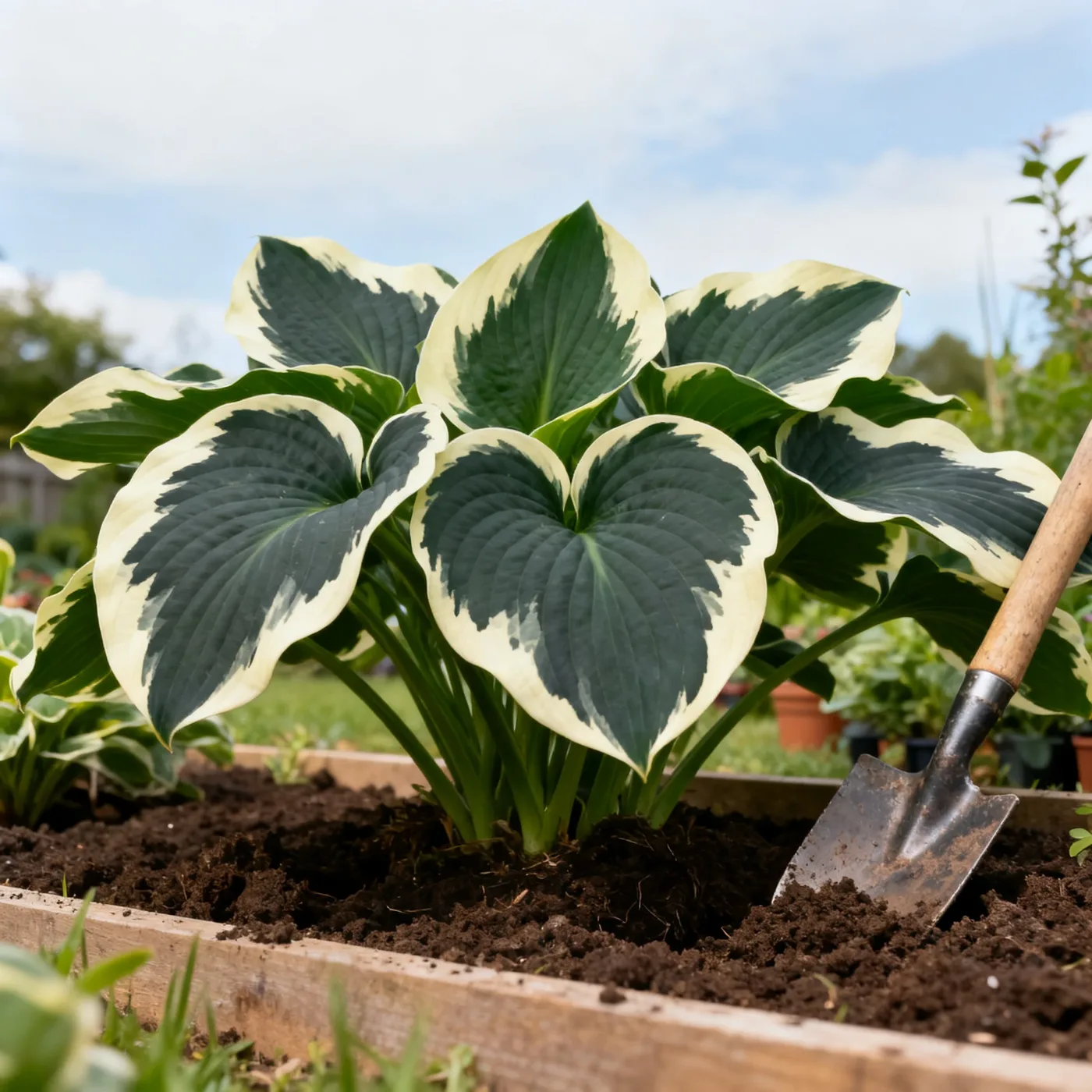
Liberty softens all of this. Its center is a medium blue-green with a powdery look, and the margin is far wider and yellow rather than white. If you want a sharp, graphic outline, that is not what you get. If you want the glow, skip ahead.
Our choice: if the crisp white edge is what made you look at this plant in the first place, Plantation Lily is the one, and nothing in Liberty will replace it.
How Much Room the Bed Can Spare
Liberty is a larger-growing sport of Patriot, and the difference shows in the leaf first. The tables kept by Iowa State's extension put a Plantation Lily leaf at about 7 inches long and 5 wide, and a Liberty leaf at about 12.6 inches long and 9.8 wide. The American Hosta Society class for Plantation Lily is medium-leaved, while Liberty falls in the giant-leaved class.
| Trait | Plantation Lily | Liberty |
|---|---|---|
| Leaf length | About 7 in | About 12.6 in |
| Leaf width | About 5 in | About 9.8 in |
| Leaf size class | Medium (30 to under 64 sq in) | Giant (120 sq in or more) |
| Margin width | About 1 in | About 2.5 in |
| Margin color | White | Golden yellow, fading to cream |
| Leaf center | Dark green, glossy | Medium blue-green, powdery |
What the Numbers Mean on the Ground
Bigger leaves build a bigger mound. A mature Plantation Lily usually fills a space about 2 to 3 feet across, and our size and growth rate guide walks through how fast it gets there. General hosta advice from Clemson is to space plants 1 to 3 feet apart. For Liberty, plan toward the generous end of that range or beyond, and read the tag on the plant you buy.
Think about what sits beside it, too. A giant-leaved mound will lean over a narrow strip and crowd a path within a few seasons. A leaf nearly twice as long also hides whatever is planted close in front of it, so low edgers get buried. Plantation Lily stays in its lane.
Our choice: a bed with less than about 3 feet to give, or a spot against a walkway, belongs to Plantation Lily. Liberty needs a corner it can own.
Picking Liberty for a Broader Golden Glow
Liberty's margin is about 2.5 inches wide, flat, and a golden yellow at its best. Over the season it changes, because the wide yellow margins fade to creamy-white. The blue-green center carries a waxy bloom on top and underneath, so the whole leaf looks softer and cooler than a glossy Plantation Lily leaf.
The reason to choose it is light. A broad band of gold lifts a dim corner in a way a thin white line cannot, and it flatters the blue-green center beside it. In low morning or late evening sun the margins look almost lit from inside.
One of the most common questions we get is whether Liberty is simply a bigger Patriot. It is bigger, but the color is its own thing. You are choosing a different plant that happens to share a parent.
The cost is the scale we covered above, plus a margin that does not stay one color. If you like the shift from butter to cream, that is a feature. If you want the same look in July as in May, it is not.
Our choice: Liberty is worth it when you have the room and want warmth and glow more than crisp contrast. Where either would fit, we lean toward the one that suits the light you actually have.
Plantation Lily in Spring Light and Summer Shade
Margins respond to the light they get, and this is where a bed's real conditions matter more than any catalog photo. The cultivar is listed for full sun to partial shade, which is a wider range than many hostas get. That does not mean it wants all-day sun. South Dakota State's extension is plain that all hostas need some shading, so aim for morning sun and dappled or open shade after noon.
What Changes From Spring to Summer
In spring, before the canopy leafs out, a bed gets more sun than it will in July, and the white margins on Plantation Lily show at their cleanest against fresh dark green. As trees fill in and the shade deepens, the contrast stays, which is a quiet advantage of a white edge over a yellow one.
Liberty's gold is the reverse. It is brightest in the strongest spring and early summer light, and it drifts toward cream as the season moves on. Deep shade can mute the yellow sooner, so a spot with some morning sun suits it best.
Summer Flowers
Plantation Lily flowers in summer with lavender-blue blooms, which pair nicely with the white edge. Our sun requirements guide covers how much light is too much if your bed gets hot afternoons.
Our choice: for steady margins through a shifting canopy, Plantation Lily. For a gold that peaks early and mellows, Liberty, in a spot with morning sun.
Margin Color Beside Plantation Lily Neighbors
A margin never sits alone. It plays against whatever grows beside it, and the two edges behave very differently. White picks up the cool tones around it. Gold picks up the warm ones, and it can clash if the neighbors are in the wrong key.
With Plantation Lily, the white edge works with nearly anything. Ferns, hellebores and astilbe all give it a quiet backdrop. Solid dark green foliage makes the white pop even more, while another variegated plant right beside it can make the picture busy. Give it a plain partner and let the outline do the talking.
Liberty asks for more thought. Its blue-green center and gold edge look best against deep greens, burgundy leaves or purple flowers. Against pale yellow or chartreuse plants it can melt into the background and lose the very glow you paid for.
Whichever you choose, give neighbors room. A bed that is too tight hides the edge under overlapping leaves, which defeats the purpose of buying a margined hosta. Our landscape ideas and companion plants guide has specific pairings.
Our choice: with mixed greens, ferns or a cool palette, Plantation Lily. With burgundy, purple or deep green around it, Liberty.
Buying Your First Plantation Lily Division
Whichever you pick, a healthy division is what matters in year one. A good plant tells you a lot before it ever goes in the ground. Look at these things:
- Several healthy eyes or shoots at the crown, not one thin sprig, so the clump fills out sooner.
- White margins that are clean and even, with no brown, mushy or papery patches along the edge.
- A firm crown. Root and crown rot can occur in poorly drained soils, according to NC State's hosta profile, so soft or sour-smelling crowns are a no.
- Roots that are white or pale and fill the pot, with no circling mass pushed out of the drainage holes.
Ask the seller whether the plant is a true Patriot or a seedling that happens to be variegated, and whether it was grown in the ground or in a container. Questions about size are fair too. Our container sizes guide covers what each pot size means.
If you are tempted to start small, remember that one division can turn into several later, which our division guide explains. A single healthy crown now is a few clumps for the rest of the bed in a couple of seasons.
Our choice: buy one well-rooted Plantation Lily with a firm crown first. It is the easier plant to place, and it will show you what your light does to a margin before you commit more space.
Planting Plantation Lily and Liberty in One Bed
The two can share a bed, and in the right spot they do well together. The sport relationship means the leaf shape and habit rhyme, so the planting looks intentional rather than random. The difference in scale does the design work for you.
Put Liberty at the back or the corner, where its larger mound has room and its gold catches the light. Set Plantation Lily in front, with its crisp white edge near the path where you will see it up close. Keep at least a Liberty-sized gap between them so the big leaves do not shade the small ones.
In our rows, we see the pair read best when each is planted in groups of one or three, not scattered one by one. Repeating a cluster down a long bed gives rhythm without fuss.
Do not push them into a tight spot to save space. Both want moist but well-drained soil, and crowding keeps air from moving through the leaves, which invites the slugs that hostas attract anyway.
Our choice: yes, if you can give Liberty a corner and Plantation Lily the front. If you only have room for one mound, plant Plantation Lily.
The September Bed We Would Plant
For most beds, we would plant Plantation Lily. It fits the space people actually have, keeps its crisp white edge through the season, and goes with nearly everything. Liberty is the better choice when you have a real corner to fill and you want gold and cream rather than white.
Picture the bed in September, with the sun low and slanting across the leaves. The white edges are still sharp around dark, glossy green, and a few lavender-blue flower stems are fading above them. If there is a Liberty in the back, its margins have turned creamy and softened into the blue-green behind them. That is the picture we would plant for, with Plantation Lily in front.
Plantation Lily
Nursery-grown Plantation Lily in sizes from 1 Gallon, shipped to your door.
From $35.97
Shop Now →Plantation Lily gets the same bed on our farms that this guide would give it at home, with damp but free-draining soil and a canopy that filters the afternoon light. Because we are a grower-run business and a small one, nothing goes out the door unless one of us would happily set it in our own garden. When you have decided how much room your border has, have a look at the Plantation Lily we have waiting for you.