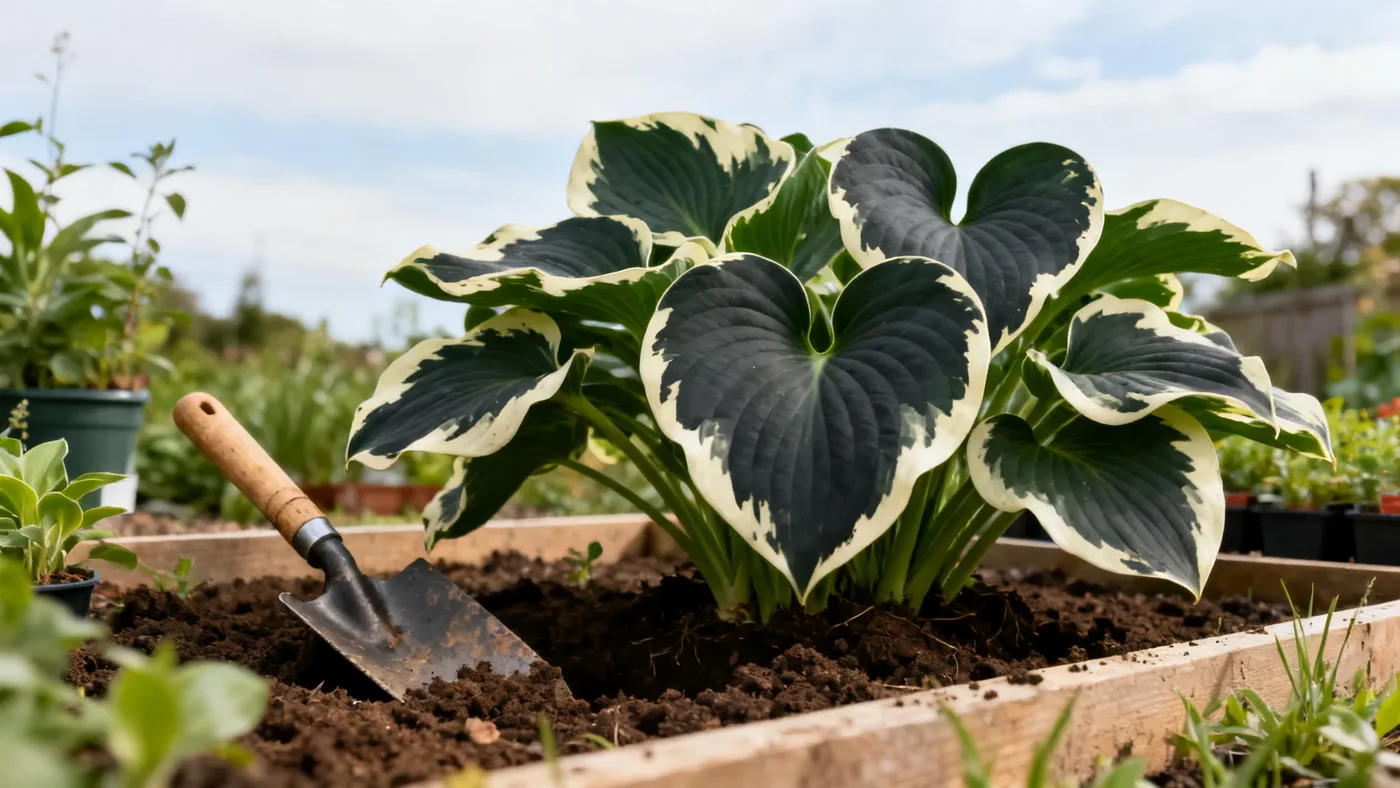
Plantation Lily Landscape Ideas and Companion Plants
Plantation Lily (Hosta 'Patriot') earns its place in shade gardens for more than just its striking dark green foliage with creamy-white margins. Pair it with the right companions and you'll build a layered, year-round landscape that thrives in the low-light spots where other perennials struggle. These seven proven combinations show you how to use spacing, height, and texture to turn a shaded corner into a garden focal point.
1. Under-Tree Mass Planting with Ferns
Plantation Lily and ferns are a natural pairing. Ferns thrive in the same moist, rich soil that Plantation Lily loves, and their fine, ferny texture contrasts beautifully against the large heart-shaped leaves. Space Plantation Lily plants 24 to 36 inches apart (center to center), and tuck smaller ferns like Japanese painted fern or autumn fern between them as the Plantation Lily clump fills in. In years one and two, the planting will look sparse, but by year three or four, when your Plantation Lily reaches its full mature width of 24 to 36 inches, the ferns will have layered the space above and below, creating visual depth.
This combination works best under deciduous trees where dappled light reaches the forest floor in spring before the canopy fully leafs out. The consistent moisture that drips from the tree canopy after rain is exactly what both plants need. Ferns also help suppress weeds in the lower zones while Plantation Lily's bold variegation anchors the composition. Water the entire bed about 1 inch per week unless sandy soil or heat spells demand more frequent watering.
Practical takeaway: Plant ferns in staggered rows offset from Plantation Lily to maximize visual impact and ensure each plant has room to mature without crowding. This approach works in zones 3 to 9.
2. Shaded Border with Layered Height Using Astilbe
Astilbe reaches 24 to 36 inches tall when in bloom, making it an ideal backdrop for Plantation Lily's 18 to 24 inch foliage mound. Plant astilbe 2 to 3 feet behind your Plantation Lily line to create a tiered effect. When astilbe blooms in mid to late summer at the same time Plantation Lily sends up its pale lavender flower scapes, the two create a soft, coordinated display. Astilbe's feathery plumes echo the airiness of ferns while providing a color uplift that makes Plantation Lily's variegated leaves pop.
Both plants demand the same growing conditions: moist, humus-rich soil and part shade to full shade. They're also equally cold-hardy across zones 3 to 9, so you can design a border once and trust it to perform reliably year after year. Avoid planting them in afternoon sun in hot climates, as both plants can suffer leaf scorch. The combination becomes even more striking in autumn when astilbe foliage turns russet and Plantation Lily leaves yellow before the hard frost causes the entire plant to collapse dormant.
Practical takeaway: Use astilbe as your back border layer, spacing it 24 to 36 inches apart behind Plantation Lily. This creates a border that works in narrow spaces while delivering maximum visual interest from spring through late summer.
3. Foundation Planting on North-Facing Walls
North-facing foundation walls are the ultimate shade garden challenge. Plantation Lily thrives where most other ornamentals decline, making it a smart anchor for a foundation bed. The afternoon shade of a north wall actually suits Plantation Lily better than a south-facing exposure, where direct afternoon sun can scorch the foliage. Space plants 24 to 36 inches apart along the wall, and pair them with heuchera (coral bells) for a complementary color story. Heuchera's deep burgundy or purple foliage creates a moody contrast against Plantation Lily's cream-margined leaves.
This pairing also solves a common foundation problem: visual monotony. Plantation Lily provides the architectural bulk, while heuchera adds fine-textured, colorful foliage at ground level. Both stay compact enough not to obscure windows or siding, and both tolerate the challenging conditions under roof eaves where water runoff can be erratic. Water deeply when you do water, aiming for about 1 inch per week during the growing season, and don't let the area dry out completely between waterings.
Practical takeaway: North-facing walls are ideal Plantation Lily territory. Combine them with heuchera for a low-maintenance, color-rich foundation planting that works in zones 3 to 9.
4. Container Specimen for Shaded Patios
Plantation Lily thrives in large containers with good drainage and consistent moisture. Use a pot at least 18 inches in diameter, fill it with rich, humus-heavy loam, and you'll have a specimen that reaches its mature 18 to 24 inch mound height within 3 to 4 years. Pot Plantation Lily alone for drama, or combine it with trailing plants like ivy or sweet potato vine for added texture. The container setting keeps the foliage closer to eye level, letting you fully appreciate the dark green leaves and creamy-white variegation.
Containers dry out faster than in-ground beds, especially in sandy loam, so check soil moisture regularly and water when the top inch feels dry. In hot climates or during drought spells, this may mean watering more frequently than the typical 1 inch per week. Containers also make it easy to move Plantation Lily if you need to relocate a patio seating area or adjust light levels. The pot naturally restricts growth to a tidy mound, and the vertical anchor works in even small courtyards or entries.
Practical takeaway: Container-grown Plantation Lily is a low-commitment way to test a planting idea or add color to a patio. Use large pots, ensure drainage, and maintain consistent watering.
5. Woodland Garden Mixed with Heuchera and Brunnera
A true woodland garden feels discovered rather than designed, yet a thoughtful plant mix creates that illusion. Layer Plantation Lily, heuchera, and brunnera (Siberian bugloss) in a loose, naturalistic drift. Brunnera produces delicate forget-me-not-like flowers in spring, followed by bold, heart-shaped leaves that echo Plantation Lily's leaf form. Space Plantation Lily 24 to 36 inches apart, and let heuchera and brunnera fill the gaps. By year three, the planting will read as a unified tapestry rather than individual specimens.
All three plants prefer consistently moist soil enriched with compost, and all tolerate part shade to full shade. Brunnera actually prefers dappled shade in hot climates to prevent leaf scorch, making this combination ideal for zones 3 to 9 if you plant it under deciduous trees. Deadheading spent brunnera flowers extends the show, while allowing some flowers to self-seed gives you a naturalistic feel. Plantation Lily's summer blooms then take the stage when brunnera fades, providing a coordinated progression of interest.
Practical takeaway: Combine these three for a low-maintenance woodland border that works across the entire zone range. All share the same cultural needs, making this a practically cohesive design.
6. Edging Along Shade Pathways
Plantation Lily's 18 to 24 inch mound and 24 to 36 inch mature width make it perfect for softening hard pathways in woodland or shade gardens. Plant a single-file row with 24 to 36 inch spacing along a gravel or mulched path, and the clumps create a gentle rhythm that guides visitors deeper into the garden. The creamy-white variegation catches low light and acts as a beacon on overcast days or during twilight walks. This use of Plantation Lily is as practical as it is beautiful, since the dense foliage suppresses weeds along the path edge.
As the clumps mature, they'll nearly touch, forming a soft boundary between the path and the surrounding planting. Thin deadwood and fallen leaves from between the clumps in early spring to keep the path tidy. Water consistently, aiming for 1 inch per week, and the plants will remain vigorous and attractive for decades. This design works in zones 3 to 9 and requires minimal maintenance beyond basic cleanup.
Practical takeaway: Use Plantation Lily as a living pathway border to define garden structure and add interest without hard landscaping. The variegated foliage brightens even the deepest shade.
7. Integration with Japanese Painted Fern Drifts
Japanese painted fern has silvery-blue fronds that create an ethereal effect against Plantation Lily's dark, cream-edged leaves. Drift Japanese painted fern in clusters of three to five plants at 12 to 18 inch spacing, then repeat the pattern along a Plantation Lily row spaced 24 to 36 inches apart. The fern's delicate texture and cool tones make Plantation Lily's heavy foliage feel lighter, while the dark green acts as an anchor for the fern's blue cast. This combination creates depth and a sophisticated color story.
Both thrive in the same rich, moist, well-drained loam and tolerate zones 3 to 9. Japanese painted fern reaches only 12 to 18 inches tall, so it won't shade out the Plantation Lily foliage. Water consistently, aiming for 1 inch per week, and keep soil mulched to retain moisture and suppress weeds. The combination looks stunning in photos and even more striking in person, especially when backlit by morning or filtered afternoon light.
Practical takeaway: Pair Plantation Lily with Japanese painted fern drifts for a refined, architectural combination that works in part shade to full shade. The contrast of leaf texture and color creates a gallery-worthy effect in even a small space.
Quick Reference: Plantation Lily Companion Planting Chart
| Companion Plant | Spacing from Plantation Lily | Light Requirements | Soil Moisture | Zones |
|---|---|---|---|---|
| Ferns | 12-18 in adjacent | Part shade to full shade | Consistent moisture | 3-9 |
| Astilbe | 24-36 in behind | Part shade to full shade | Consistent moisture | 3-9 |
| Heuchera | 12-18 in adjacent | Part shade to full shade | Consistent moisture | 3-9 |
| Brunnera | 12-18 in adjacent | Part shade to dappled shade | Consistent moisture | 3-9 |
| Japanese Painted Fern | 12-18 in clusters | Part shade to full shade | Consistent moisture | 3-9 |
For detailed care instructions, see our complete growing guide and our article on Plantation Lily sun requirements.