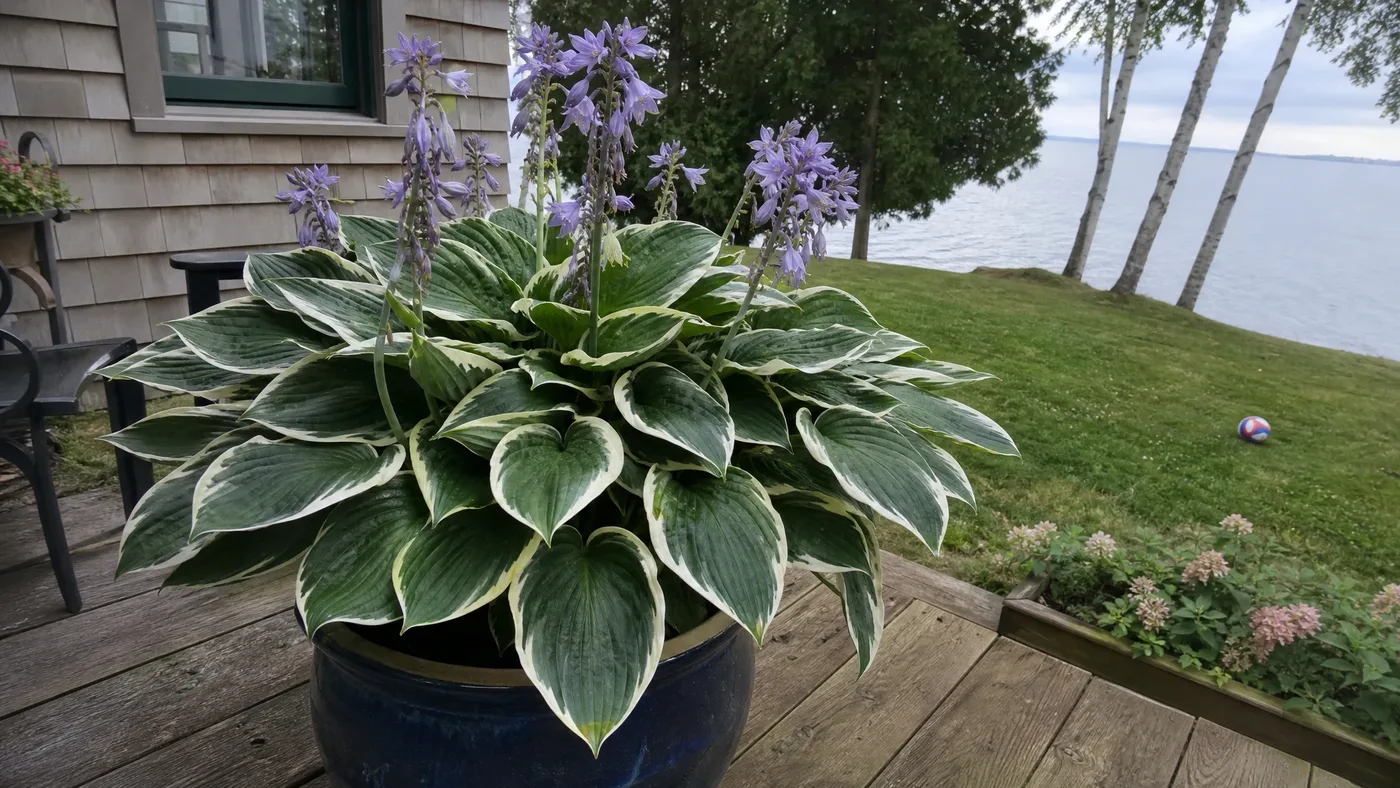
Plantation Lily vs Wide Brim Hosta: Margin Color and Size
Most people assume Plantation Lily and Wide Brim are close to interchangeable, since both are medium-sized hostas with dark green leaves and a pale edge. What we hear from customers who already own a Plantation Lily (Hosta 'Patriot') is a worry that they picked the wrong one for their yard. In nearly every case they didn't, and a clump that looks tired is usually just sitting in a spot that suits the other plant better.
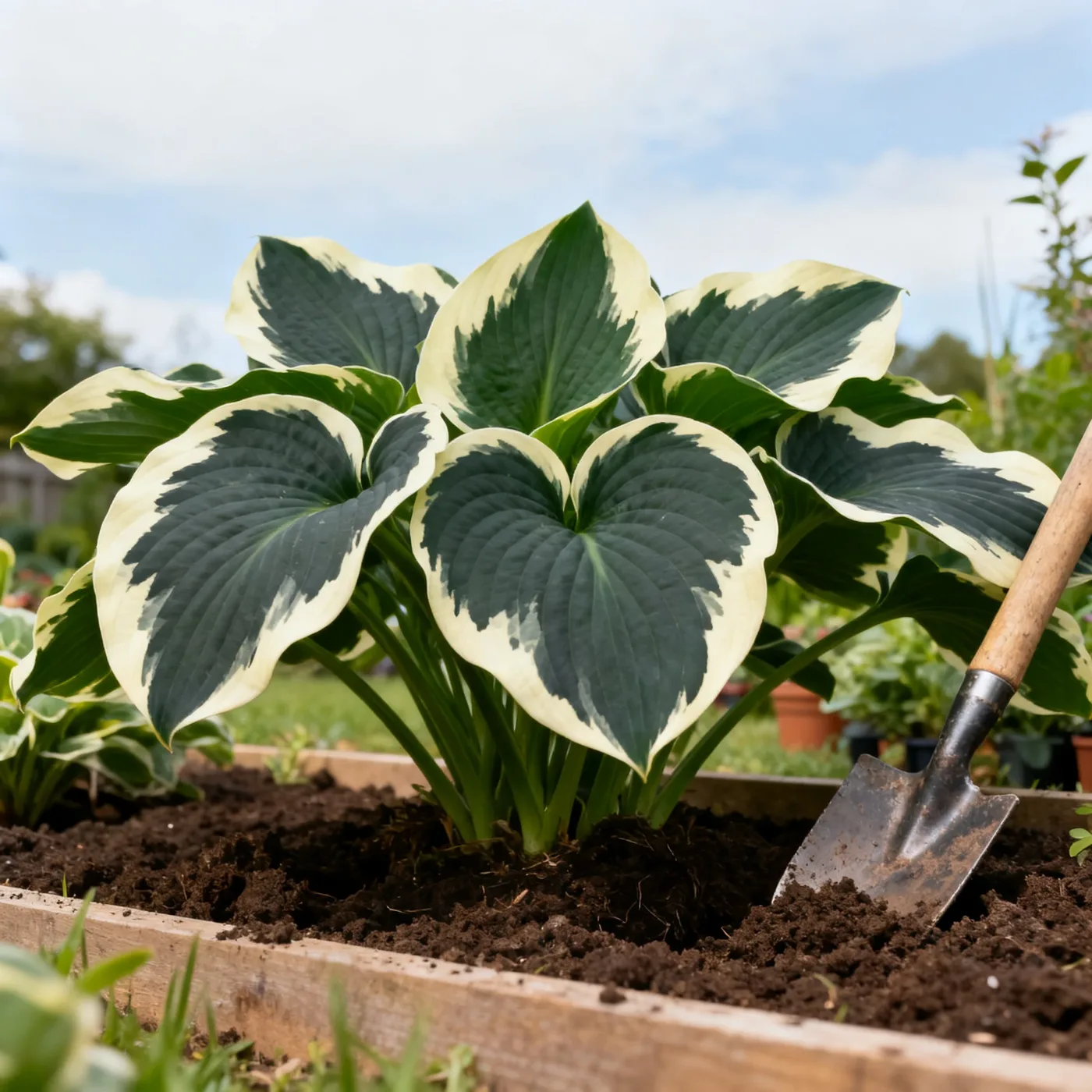
The margin is the reason to grow either of these, and sun, wind and cramped roots are what dull it. Patriot has a crisp white margin about 1 inch wide, while Wide Brim carries a broader yellow edge on a larger, more sun-tolerant plant.
Read on for four yard situations, a narrow side bed, a windy corner, a hot deck pot and a bed with morning sun, so you can see which hosta each one favors and what to do if yours is already in the ground.
Squeezing Plantation Lily Into a Narrow Side Bed
A side bed along a wall or fence is where Plantation Lily earns its keep. It forms a mound about 18 to 24 inches tall and 24 to 36 inches across, with leaves 7 inches long and 5 inches wide. Wide Brim's leaves measure 8.5 inches long and 6 inches wide, and the clump grows to match, so it wants more room than a thin strip gives it.
For a narrow bed we would choose Plantation Lily without hesitating. Hostas as a genus run from 4 inches to 2 feet 6 inches tall, and Patriot sits comfortably in the middle. It is tall enough to fill the bed and not so wide that it spills onto the walk. This table sets the two side by side on the points that matter in tight quarters.
| Feature | Plantation Lily 'Patriot' | Wide Brim |
|---|---|---|
| Leaf size | 7 in long, 5 in wide | 8.5 in long, 6 in wide |
| Margin | White, about 1 in wide | Yellow fading to creamy white, 1 to 2 in wide |
| Leaf surface | Dark green, glossy on top | Medium to dark green, moderately corrugated, wavy edge |
| Overall clump | Moderate mound | Larger and broader |
| Light it likes | Shade to morning sun | More sun-tolerant |
Spacing Along a Wall
The usual advice for hostas is to space them 1 to 3 feet apart. In a narrow bed we stay near the tight end of that range for Plantation Lily and leave a little gap from the foundation so air can move through the leaves. Crowded, damp foliage is exactly where slugs settle in. Our guide to how big Plantation Lily gets has the full picture on mature size.
Light Beside the House
A side bed usually gets bright shade or a few hours of sun, and that suits the white margin of Patriot well. In dim light it glows against the dark green leaf, which is the effect you bought it for. If your strip gets more sun than that, our sun requirements guide explains how far to push it.
What a Narrow Bed Rewards
Because Patriot stays in bounds, a row of three or four along a fence reads as one deliberate edge of white against the siding, rather than a jumble of oversized leaves. The lavender-blue flowers open in summer and stand just above the foliage, close enough to a walkway that you will notice them as you pass. A Wide Brim in the same strip would need dividing or trimming back much sooner, and neither of those jobs is pleasant in a tight space.
The Windy Corner Lot With Plantation Lily
Wind hurts a hosta in two ways. It shreds the leaf blades, and it dries the edges faster than the roots can resupply them. A corner lot delivers both. Plantation Lily has the advantage here, mostly because its leaves are smaller, 7 by 5 inches against Wide Brim's 8.5 by 6, so each leaf is a smaller sail on its stalk. Neither one is wind-proof, and neither belongs in an open gap with nothing to break the air.
Leaf Tear
Big, soft leaves tear along the veins when a gust catches them, and spring is the worst time because the new leaves are still unfurling. In our rows, the bigger leaves are the ones that show wind damage first, and Wide Brim's wavy, corrugated blades are the larger of the two. A torn leaf won't recover, but newer leaves soon cover the damage.
Patriot's glossy, smooth-surfaced leaf also sheds a gust a little better than a heavily corrugated one that catches air in its folds. That is a small edge, not a guarantee, so do not skip the windbreak just because the plant is the smaller of the two.
Margin Damage
The pale margin is the thinnest, most exposed part of the leaf. Yellow and cream edges may brown during dry periods, and steady wind turns a damp afternoon into a dry one. Patriot's 1 inch margin has less area to lose than Wide Brim's 1 to 2 inch edge. A browned white margin shows more against dark green, though, so you will notice it sooner.
Giving the Corner Some Cover
Shelter does more than the choice of plant. Set the clump on the lee side of a fence, shrub or the house, so the prevailing wind hits something else first. Water at the base in the morning, before the wind picks up, and spread mulch to hold moisture around the roots. If the corner is truly exposed, plant Patriot and give it cover. If you cannot offer any, think twice about either hosta there.
Edges that brown in late summer do not mean the plant is failing. Cut the worst leaves back to the base if they bother you, keep watering, and the clump will push fresh growth next spring.
A Hot Deck Pot of Plantation Lily
A deck pot is the toughest test for a hosta. Boards and railings throw back heat, the roots have only a pot's worth of mix, and the mix dries quickly. This is the one case where we lean toward Wide Brim if the deck takes afternoon sun, because it is the more sun-tolerant plant. Plantation Lily has a lot of white in its margin, and heavily variegated hostas want shade to prevent leaf burn. On a deck with morning sun and afternoon shade, though, it does very well.
Heat and Sun Tolerance
Clemson's hosta factsheet notes that some cultivars tolerate sun, but all do best with shade in the afternoon. Treat that as the rule for any pot. Place the container where the hot afternoon sun is blocked by the house, an umbrella or a taller planter. Patriot can take more light than its pale edge suggests, so long as the heat is off it by midday and the mix never dries out completely.
Keeping the Pot Moist
In the ground, hostas do best with about 1 inch of water per week, and a pot on a hot deck will want more than that. Our guide to growing Plantation Lily in pots covers mix and pot choice, and the watering guide covers timing. A few habits make the biggest difference:
- Check the mix by hand each morning in summer and water when the top feels dry, rather than on a fixed schedule.
- Use a pot with drainage holes and lift it off the boards on small feet, so heat and standing water don't sit under the roots.
- Choose a bigger pot for Wide Brim, since its larger clump fills a container faster and dries it out sooner.
Reading the Leaves on a Hot Day
A hosta in a hot pot will tell you what it needs. Leaves that droop at midday and perk up by evening are asking for water, while crisp brown margins and pale, bleached patches mean the plant is getting too much direct sun. Move the pot a few feet before you change anything else. Moving a container costs nothing, and it fixes more deck-pot problems than extra fertilizer or a bigger watering can ever will.
Slugs still find their way to pots, especially ones that sit on damp saucers. Keep saucers empty and check the undersides of leaves in the evening.
Morning Sun Under a Maple Where Wide Brim Wins
A bed under a maple that gets morning sun and dappled light later is where we would plant Wide Brim. Its broad yellow margin needs some light to look its best. Iowa State notes that most yellow and gold hostas develop their best color in about 4 to 6 hours of partial sun, and in heavier shade the color turns a duller yellow-green. That is the right setting for a 1 to 2 inch margin to stand out.
Why the Larger Habit Helps
Under a big tree there is bare ground between roots and a trunk that dwarfs small plants. Wide Brim's bigger leaves and broader clump hold their own there, where a moderate mound like Patriot can look lost. We often see customers put a small hosta against a large trunk and then feel the bed looks thin. A larger plant solves that without a second purchase.
Margin Color Through the Season
Wide Brim's margin starts yellow and turns creamy white as the season goes on, so the plant changes color between spring and midsummer. Patriot's margin stays white from the start, which gives a steadier, cooler look. If you want warmth under the tree, Wide Brim delivers it. If you want a clean contrast that does not change, Patriot is the plant, and it will tolerate the morning light just fine.
Roots and Water
Maples are thirsty, and their roots take moisture from everything planted near them. Hostas like moist, slightly acidic soil, so expect to water more than rain alone provides, and add compost when you plant. Our landscape ideas guide has companions that cope with dry shade.
If you already planted Plantation Lily in this spot, it isn't a lost cause. Patriot can take morning sun, and the clump will live. The margin may scorch where afternoon light reaches it, and that is the cue to move it to calmer light in spring.
What Each Yard Taught Us About Plantation Lily
Looking across the four yards, the pattern is simple. Where space is tight, wind is strong or the pot is small, the smaller leaves and moderate size of Plantation Lily work in its favor. Where there is more sun and more room, Wide Brim's broader yellow margin and larger habit earn their place. Neither is the wrong plant, only the wrong spot.
If the one you bought isn't doing what you pictured, don't worry. Any of these choices is fixable by moving a clump in spring, when hostas are easy to lift and reset. Pick the spot that matches the lines above and the margin will do the rest.
Plantation Lily
Nursery-grown Plantation Lily in sizes from 1 Gallon, shipped to your door.
From $35.97
Shop Now →We grow Plantation Lily in beds that stay evenly damp and drain well, under light shade that keeps its white margin crisp, so the contrast you are weighing in this guide is one we see in person. As a small grower-run business, we only ship plants we would plant ourselves, and that holds for every top-quality hosta we send. If you have settled on the margin and size you want, we would love for you to see the Plantation Lily we have ready.