Is Plantain Lily the Same Plant as Hosta? Naming Explained
Picture a damp woodland clearing in East Asia, where broad leaves unfurl through the leaf litter each spring under a canopy that never quite lets the sun through. The plants that grew there later collected a tangle of names. Someone searching for "plantain lily" could easily expect something different from a hosta.
Sorting out the names matters because a wrong guess can send you home with a plant that wants different light, or with a tag you cannot match to anything you read. Plantation Lily is a good example, since it is Hosta 'Patriot' and behaves like a hosta in every way that counts. Read on for where plantain lily came from, how Funkia fits in, what makes a cultivar different from a species, the one fragrant exception, and how to read a plant tag with confidence.
Where Plantain Lily Got Its Name
Plantain lily is the older English common name for the hosta group. It describes the leaf, which is broad, oval, strongly ribbed and held in a loose rosette, much like the leaves of the plantain weed that grows in lawns. Hold a Plantation Lily leaf up to the light and you can see the deep, arching veins that earned the comparison.
The second half of the name comes from the flowers. Hosta blooms are bell-shaped or trumpet-shaped, which gave early gardeners a reason to call them lilies even though the group belongs to the asparagus family, Asparagaceae. Extension publications treat the two names as one plant, as in the University of Nebraska's note that hosta, also called plantain lily, is a perennial for shade.
So the answer to the question in our title is yes. Plantain lily and hosta point to the same group of plants, and choosing between the words is a matter of habit, not botany. One of the most common questions we get is whether a plantain lily needs different care from a hosta, and it does not.
You will also meet names like Siebold's plantain lily. That is the common name of a single species, Hosta sieboldiana, not of the whole group. The pattern holds throughout: the plain-English name sits in front, and the botanical name behind it tells you exactly which plant you have.
Hosta, Funkia, and a Tangled Naming History
The scientific name of this group has not always been Hosta. For a long stretch the plants were sold as Funkia, which is the genus's former name. If you open an older garden book or an old catalog and find Funkia in the index, you are very likely looking at a hosta.
A scientific rename changes the label, not the plant. The leaves, the roots and the lavender or white flower stalks stay as they were, and care that worked under the old name works under the new one. Botanists settled on Hosta, and the friendlier plantain lily stayed in everyday speech alongside it.
The tangle deepens because the group is large. The genus holds 22 species and over 2000 cultivars, so one plant can carry a genus name, a species name, a cultivar name in quotes and a common name all at once. Hosta 'Patriot' is the botanical way of writing what we call Plantation Lily.
That layering is why a search for plantain lily and a search for hosta return the same pictures. Treat Funkia, Hosta and plantain lily as three names for one group of shade perennials. Then use the cultivar name to learn which one is actually in the pot.
Why Plantation Lily Is a Cultivar, Not a Species
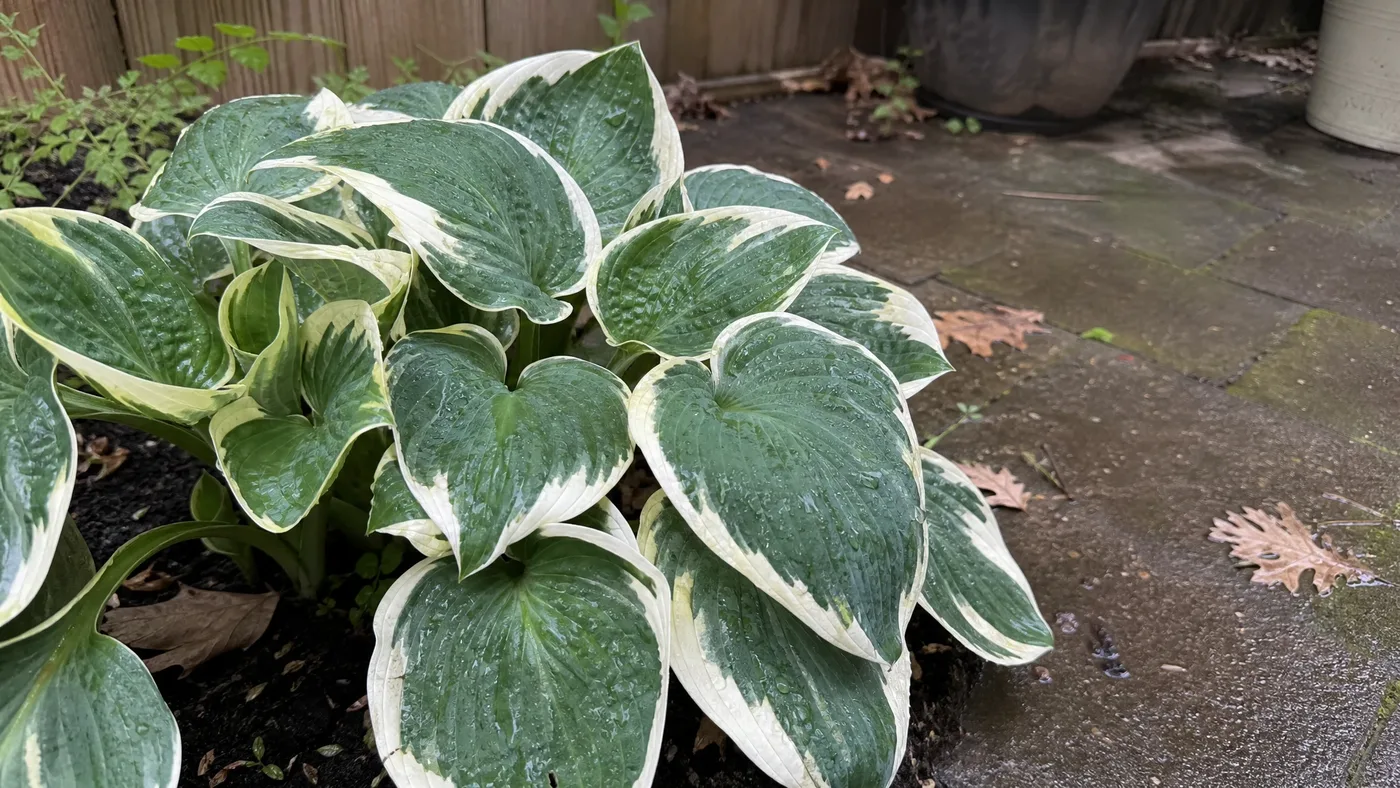
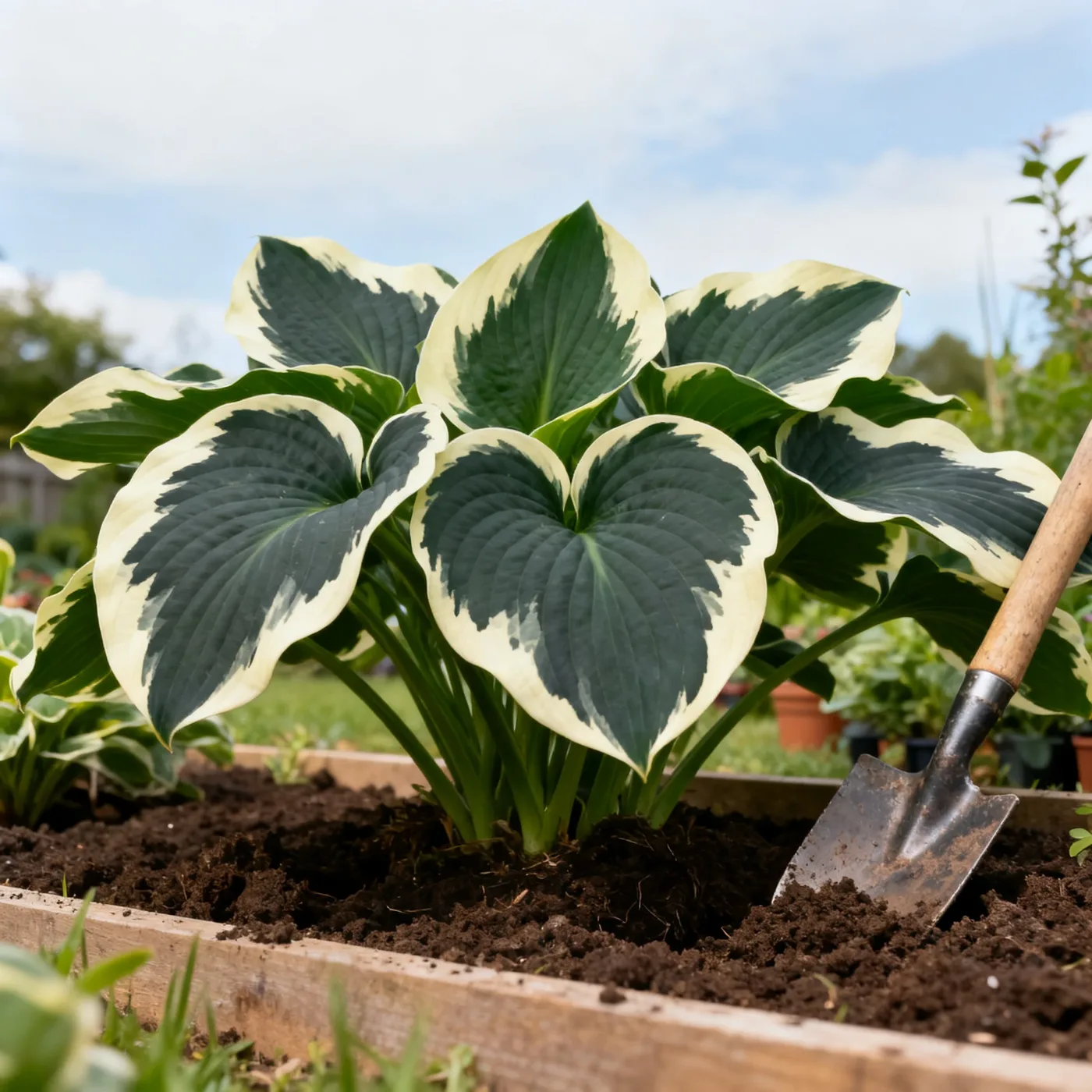
Plantation Lily is the common name we use for Hosta 'Patriot'. The single quotes around Patriot mark a cultivar, a plant selected and multiplied for particular traits instead of a wild species. In the garden you recognize it by its dark green leaves with a wide white margin, and Clemson's extension factsheet lists it at 12 inches tall by 30 inches wide.
Those numbers show where the cultivar sits against the genus. The whole genus runs from 4 inches to 2 feet 6 inches tall and from 6 inches to 3 feet wide, so Patriot lands in the broad middle. The flowers differ too. Patriot carries lavender-blue blooms in summer, while the genus runs from white to lavender and purple.
Because it is a cultivar, Plantation Lily is multiplied by division, and every division should look like the plant it came from. You will not find "Plantation Lily" in a list of species, which is why the botanical name on the tag is the one to trust. Our cultivar comparison sets it beside its closest relatives.
The Fragrant Exception: Hosta Plantaginea
There is one plant for which "plantain lily" points to something distinct. Hosta plantaginea is the plantain lily, native to China, with fragrant, large, white flowers and lime-green foliage. A search for the common name can therefore land on a plant that does not behave like Plantation Lily.
Its flowers are the scented ones people write about. The trumpet-shaped blooms open in the evening and attract hummingbirds and pollinators, and they appear in late August and September. If scent at dusk is what you want, plant this species near a patio or window you use in the evening.
The table below sets the species beside our cultivar so you can see how far apart they are.
| Trait | Plantation Lily (Hosta 'Patriot') | Hosta plantaginea |
|---|---|---|
| Type | Cultivar | Species |
| Leaves | Dark green with a wide white margin | Lime green |
| Size | About 12 in tall and 30 in wide | 1–2 ft tall and 3–4 ft wide |
| Flowers | Lavender-blue | Large, white, fragrant, open in the evening |
| Bloom timing | Summer | Late August and September |
Clemson calls plantaginea the most heat- and sun-tolerant hosta species, growing in shade to three-quarters of a day of sun. Do not borrow that rule for Plantation Lily. We grow ours for its leaves and its summer flower stalks, not for scent.
Woodland Origins Behind Plantation Lily Habits
Hostas are native to China, Japan, Korea and Far East Russia, and the genus grew up on forest floors. Nearly everything a hosta asks of your garden traces back to that setting: moving light, soil full of decayed leaves, and a winter rest. Plantation Lily is a cultivar, but it carries those habits with it.
Dappled Light, Not Deep Dark
Common advice says hostas want deep shade. A woodland says otherwise, because light on a forest floor moves through the canopy all day. Minnesota's extension service says hostas thrive where filtered or dappled shade is available for much of the day, and it warns that too dark a spot slows growth.
For Plantation Lily we aim for gentle morning light with shade through the hot afternoon. Our shade tolerance guide walks through how much is too much.
Moisture and Leaf Litter
The forest floor holds moisture because fallen leaves rot into rich, spongy soil that still drains. Recreate that with compost worked into the bed. Several extension services suggest about 1 inch of water per week, and our watering guide covers how to adjust it. Root and crown rot can occur in poorly drained soils, so moist should never mean soggy.
Winter Dormancy and Woodland Neighbors
Hostas are herbaceous perennials, so the leaves collapse after frost and the buds rest underground until spring. The genus is hardy in zones 3a through 9b, which shows how well that rest copes with cold. The same woods hold slugs, snails, deer and rabbits, and all of them eat hosta leaves, so expect visitors in your beds too.
Reading Plant Tags for Plantation Lily Correctly
We often see customers pick up a pot labeled only "plantain lily" and wonder which plant they have. A tag can carry any mix of common name, genus, cultivar and trade name. The botanical line is the one that settles it.
What to Check on the Label
Work through the tag in this order and you will rarely buy the wrong plant.
- Look for the botanical name. Hosta 'Patriot' is Plantation Lily, whatever else is printed on the tag.
- Check for single quotes after the genus. Quotes mean a cultivar, while a lone species name such as plantaginea means the fragrant plant described above.
- Treat "plantain lily" or "hosta" on its own as incomplete. With more than 2000 cultivars in the genus, the name alone does not tell you which one you hold.
- Compare the mature size on the tag with what you expect. Plantation Lily reaches about 12 inches tall and 30 inches wide, which helps you spot a mislabeled pot.
- Look at the leaf. Dark green with a wide white margin is the look to expect, and a leaf that is plain lime green points toward something else.
Look-Alikes and Old Labels
Several white-edged hostas resemble Patriot at a glance, which is the most common source of mix-ups. Our comparison with Hosta 'Francee' shows what separates the two. If a tag says Funkia, read it as Hosta and ask for the cultivar name.
When you are weighing pot sizes, our guide to what to look for in a container plant covers the signs of a healthy crown.
What Plantation Lily Means for Your Shade Garden
Knowing the name tells you how to place it. Plantation Lily is a mound of dark green, white-edged leaves that brightens a dim corner, and in summer it sends up stalks of lavender-blue flowers above the foliage. Give it the woodland edge it evolved for, not a spot against a hot south wall.
Space plants 1 to 3 feet apart, the usual range for hostas. Because this cultivar reaches about 30 inches across, aim for the wide end of that range so the leaves overlap without crowding. Set them in rich, moist, well-drained soil, ideally where afternoon shade arrives early.
Plan for the visitors the woodland sent. Deer favor hosta leaves through the growing season, and slugs and snails are the most common problem, so check the bed after rain. All parts of hostas are also toxic to cats, dogs and horses, which matters if pets share your yard.
Finally, check your zone locally. The genus is rated for a wide range, but your local extension service can tell you how a hosta will do through your winters.
Plantation Lily by Any Name Grows the Same
Plantain lily and hosta are the same group of plants, and Funkia is simply the old scientific name for it. Plantation Lily is the common name of one cultivar, Hosta 'Patriot', with white-edged leaves and lavender-blue summer flowers. The only true exception is the fragrant, white-flowered Hosta plantaginea, which has its own tastes for sun and bloom time.
Read the botanical name on the tag, give the plant woodland light and steady moisture, and let it rest each winter. The names overlap, but the care is the same.
Plantation Lily
Nursery-grown Plantation Lily in sizes from 1 Gallon, shipped to your door.
From $35.97
Shop Now →Plantation Lily, the white-edged hosta also sold as Patriot, does best in moist, well-drained soil with a bit of shade, and that is exactly where ours spend the season on our farms. We grow and sell top-quality plants as a small business with our own farms, so whatever name you know it by, we have raised it with care. When you are ready to plant, we would love for you to take a look.