Can You Grow Plantation Lily (Hosta Patriot) Indoors?
A pot, a season of watering, and a clump that never recovers: that is what a failed indoor hosta experiment costs, and we see it most often in the second spring, when the pot you carried inside last fall stays bare. Plantation Lily (Hosta 'Patriot') looks fine on a windowsill for a while, which is exactly why the experiment tempts people.
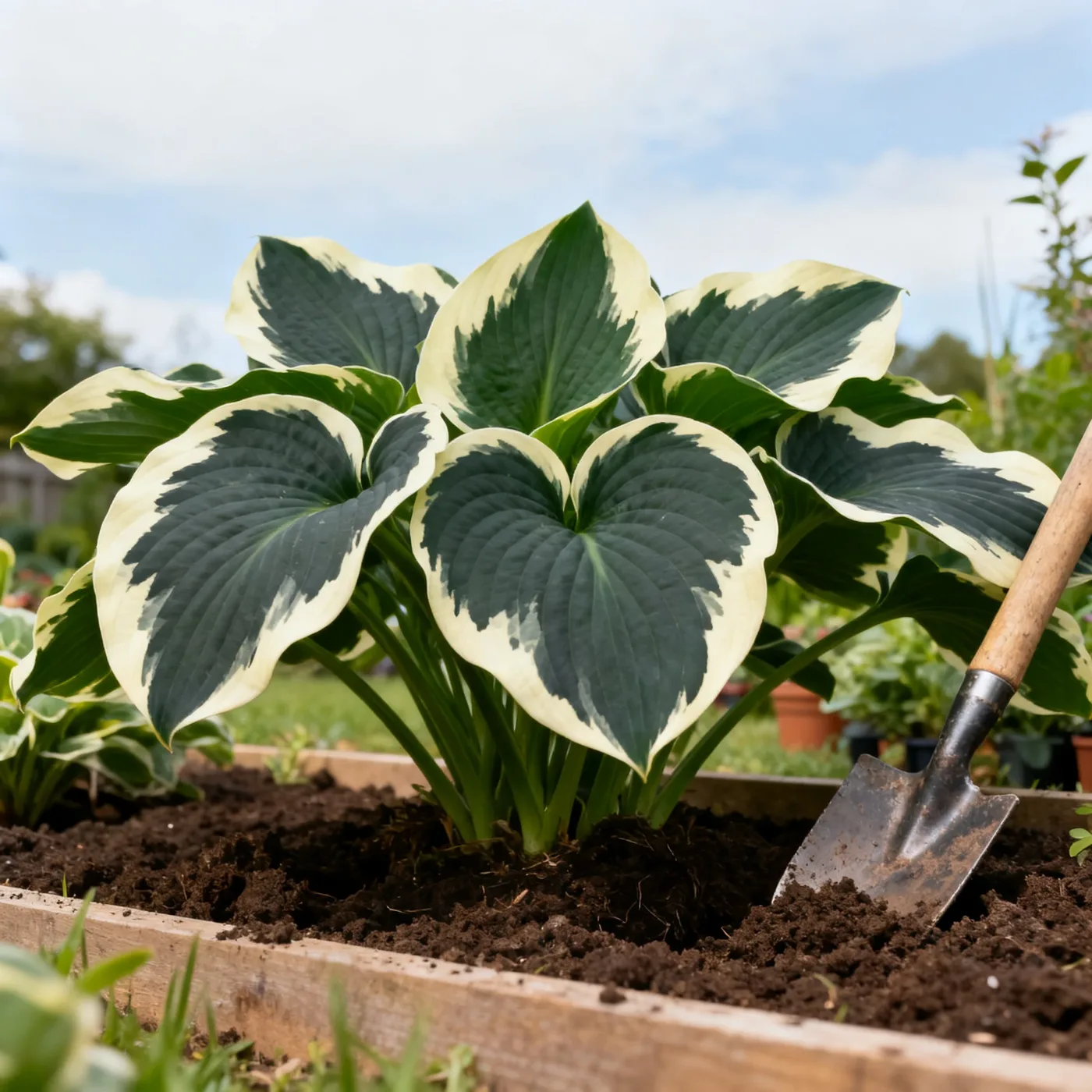
This article talks about why this hosta cannot live indoors for good, how to run a short forcing trial if you want leaves in winter, and how to get the plant back outside afterward. Read on to learn how its winter rest works, what indoor decline looks like, what a trial costs compared with planting outdoors, and how to keep the division for years.
Why Plantation Lily 'Patriot' Needs Its Winter Sleep
Plantation Lily is a herbaceous perennial, so its leaves are built to die back every year while the plant lives on below ground. As Illinois Extension puts it, hardy perennials have roots that sleep until the following spring, when they grow again. That sleep is a scheduled part of the yearly cycle, not a reaction to poor care, and a warm living room does not cancel it.
The cultivar carries the same programming as the rest of the genus. Hostas are rated for USDA zones 3a through 9b, a range that only makes sense for a plant that expects freezing weather and handles it by retreating underground. Breeding a particular leaf or flower into 'Patriot' did not breed that expectation out.
The rhythm matters because of what the plant gives back. In one outdoor season a clump builds a mound that can reach roughly 20 to 40 inches in height and spread, then sends up lavender-blue flowers in summer. That whole performance is paid for by the rest that came before it. Skip the rest and you skip most of the show.
What we tell customers is to treat dormancy as part of the plant's job, not a problem to solve.
Roots, Crowns, and the Cold Clock
Everything the plant needs to restart sits at or just below the soil line. The crown is the compact base where the buds form, and the thick roots beneath it store the energy that pushes those buds into leaves. The leaves are temporary. The crown and roots are the permanent plant, and they are what a failed indoor trial damages.
How the Buds Read Winter
Hostas evolved for a cold season followed by warming, and the buds are tuned to that sequence. Cold tells them to hold, and the return of warmth tells them to go. We call this the cold clock. A crown that never lives through the cold half has nothing to count down from, so it wakes late, weakly, or not at all.
Why a Pot Changes the Clock
In the ground, soil buffers the crown against sudden swings. In a pot, the root mass is small and exposed on every side, so it cools faster and warms faster than garden soil. That is why Penn State advises that you go two zones colder with containerized plants and use larger pots for more insulation.
The same exposure works against you indoors. A pot kept at room temperature never gets the steady chill the buds expect, and it never gets the clean warm-up either. The clock is not paused, it is scrambled.
Protect the crown, and deliver the cold. Those are the two jobs.
What Fails When Plantation Lily Stays Indoors
One of the most common questions we get is why a hosta that looked healthy all winter indoors never came back. The answer is that the damage happens slowly and out of sight, and each stage looks like something you could fix with more care.
The Slow Decline
The first fall, the leaves yellow and flop as the plant tries to go dormant. Most owners read this as thirst or disease and water more. Now the plant wants to rest while the mix stays wet, and NC State notes that root and crown rot can occur in poorly drained soils. A soggy winter pot is that condition on a small scale.
If the leaves hold on, they hold on thin. Winter window light is weak compared with a summer bed, and heated air is dry, so the growth that does appear is pale, soft and short-lived. By the following summer you may see a few small leaves and no flower stalks. Each year the clump gets smaller, and a clump that is shrinking never gets near its mature size.
Why Better Care Does Not Fix It
Fertilizer, a brighter window or a bigger pot all treat a plant that is short of food or light. This plant is short of rest. More feeding on a crown that should be sleeping just pushes weak growth and adds salts to a small pot.
If you want to know how far indoor conditions can be pushed, the answer is a few weeks, not a year. That is the next section.
Forcing a Potted Division for a Few Weeks
A forcing trial borrows the plant's leaves for a short time and then returns it to its normal cycle. It works because the division has already had its cold rest. The trial fails when you skip the rest, so do not bring a plant inside straight from a warm season and expect it to behave.
Setting Up the Trial
Start with a small division from a healthy, established clump. Our division guide shows how to cut one cleanly. Then follow these steps:
- Pot the division in a well-drained, moist mix in a pot just big enough for its roots, with a drainage hole you have checked is open.
- Give it its cold rest outdoors or in an unheated space, and Penn State lists an unheated garage, shed, cold frame or basement as workable. Keep the mix barely moist, never wet.
- When you want leaves, move it to a bright, cool room away from heater vents. Expect shoots to appear over a few weeks.
- Water by feel. Outdoor beds need about 1 inch of water per week, which is far more than a small pot needs.
Light, Pets and the End Date
Give it bright light without hot glare, because all hostas need some shading. Keep the pot where pets cannot chew it, since the foliage is toxic to dogs and cats and our toxicity guide covers the details.
Set an end date before you start. A few weeks of leaf is the goal, and then the pot goes back to the cold.
Weighing Cost and Effort Against Planting Outside
Think of the trial the way you would think of any garden project: what does it cost this year, and what does it cost the plant over the next several? A division is cheap and a pot is cheap, so the money is small. The real expense is the growth you give up when the plant spends a season indoors instead of in the ground.
This table compares the four realistic options.
| Option | Space | Upkeep | Likely outcome |
|---|---|---|---|
| Year-round indoors | A bright windowsill, permanently | Constant watering decisions | Slow decline, often lost |
| Short forcing trial | One pot and one bright window for a few weeks | Light watering, then a move back to the cold | Leaves for a short time, plant survives if returned |
| Cold-stored pot, no forcing | A corner of an unheated garage, shed or basement | Occasional checks for dryness | Normal spring growth |
| Planted outdoors | A shaded to part-sun bed | Water in dry spells, slug watch | Full mound and summer flowers |
Indoors you trade slugs and deer for rot and dim light, and the trade is not in your favor. Outdoors, the usual hosta problems are manageable, and Clemson notes that garden slugs are the most common one. If you prefer a patio pot that stays outside through winter, our guide to growing Plantation Lily in pots and containers covers it.
The cheapest, lowest-effort option for the plant's long-term health is the one with the least indoor time.
Planning Plantation Lily's Return Outdoors
A forced plant has spent stored energy on early leaves, so plan its return as carefully as its visit. The goal is to get the division back in the ground, or into an outdoor pot, in time to rebuild and to take a real winter again. Work through these steps in order:
- End the trial while the leaves are still in decent shape, rather than waiting for them to tire.
- Harden the plant off by setting it outdoors in shade for a little longer each day, and bring it in on any cold night.
- Wait until freezing weather has passed, and check your local extension service for your area's timing.
- Plant it at the same depth it grew in the pot, in moist, well-drained soil in part shade, and water it in well.
- Leave the first season's growth alone. Expect a modest year while the roots rebuild.
Check your zone against our hardiness zone guide before you choose the spot, so the crown gets the winter it needs.
Then protect that first outdoor winter. Our winter care guide covers the in-ground plant. If you keep it in a pot, Illinois Extension describes burying the pot under about a foot of shredded leaves, which gives it the winter of its hardiness zone.
Plantation Lily as a Short-Term Houseplant Only
The verdict is simple. Plantation Lily can visit your house, but it cannot live there. A few weeks of forced leaves is a fair use of a division you can spare. A year-round windowsill is a slow way to lose a plant that would otherwise return for many seasons.
The planner's view is that the plant is worth more outside. Every year it spends in the ground is a year of larger crowns, more divisions and more summer flowers. An indoor experiment costs those years, and the forcing trial is the only version that gives them back.
Keep Plantation Lily Outside, Borrow It Inside
Plantation Lily needs a real winter to grow again each spring, so year-round indoor growing leads to a fading clump. A forced division is a short loan. It works when the division has already had its cold rest, gets bright light without glare, is watered by feel, and goes back outdoors on a plan.
The trial is worth the effort under one condition: you have a spare division, a cold place to rest it, and an outdoor spot ready to receive it afterward.
Plantation Lily
Nursery-grown Plantation Lily in sizes from 1 Gallon, shipped to your door.
From $35.97
Shop Now →Out on our own farms, Plantation Lily grows in damp but free-draining soil under filtered light, and it gets a full cold winter before it wakes again in spring. That is the rhythm this guide recommends, and it comes from a small business that raises every plant it sells with top-quality care. If you would rather have the hosta outdoors where it belongs, you are welcome to see what is in stock now.